So, I clicked “submit” on the last question of the final exam a couple of hours ago, and I'm satisfied to note I have an overall 92% grade. But was it a good course?
Ooh, let's rewind a bit. This course is supposed to be many things, an introduction to the world of genomic, or precision, medicine for the layman as well as for medical students. In eight short weeks, we get maybe a dozen different people giving short lectures about their particular field, all in relation with genomic medicine. The lectures are arranged in four themes, which are broadly the clinic, the lab, business, and ethics. Dr Haddad, the main instructor, introduces everybody and conducts Q&A sessions, in order for the course not to feel too disjointed.
So, a success? Partly. The production is good, although maybe they've overdone it a bit. Before each video segment we have a full page of text explaining the pedagogical objectives of the segment. Big instructions in bold remind us to use the navigation bar to, erm, navigate the course. And so on. It feels somewhat dumbed-down.
The course content is, obviously, varied. Generally I liked the clinic theme and was bored with the other three (the lab one was very introductory). Although they emphasize that medical students may be watching the videos, in truth − I guess medical students have better things to do. The overall level of the course is very, very basic. Apart from a tidbit here and there (I wasn't aware of fluorescent in-situ hybridization), I can't say I have learned much during the course, and only stuck with it because it's summer and I had nothing better to do.
Hmm… I may sound too harsh. Let's say that if you approach this course as you would, say, one from MIT, then you'll be disappointed. Which is not to say there isn't merit; the team have made a good attempt at surveying the landscape of genomic medicine, primarily from doctors' points of view, and deliver something akin to an Internet-era pop-science book, and a pretty decent one at that.
So, would I recommend this course? Not generally, not to people with a utilitarian view of MOOCs, who measure success in skills and knowledge acquisition. But to specific people, maybe to people who're simply curious, who've heard about sequencing the genome, maybe about the recent judicial issues surrounding 23andMe, and who are willing to spend a couple of hours a week to find out more about it, yeah. Definitely.
Showing posts with label life sciences. Show all posts
Showing posts with label life sciences. Show all posts
Wednesday, July 30, 2014

Monday, July 21, 2014
Quantitative biology workshop, MIT
MIT's 7.QBW's winding down. I'm not sure what to think about it.
On the one hand, it's nice to get to grips with some biological problems with the tools actual computational biologists use. As usual, MIT do things seriously, the syllabus is impressive, the lectures are great and stimulating, etc.
On the other hand, it's very frustrating − we only get to lightly touch on to some very basic concepts. I can't really say I've learned anything of substance; most of the “workshops” have been, by necessity, hobbled by the idea that primarily biologists would take the course, with little to no competence in computer programming. And so, to review a number of languages and tools in a very short time, everything is kept very basic, very introductory. Only once so far was there a really interesting problem (the MATLAB one on neurological analysis).
A quick trawl through the forums show that basically there are two populations − the biologists who find the programming assignments very hard, and the programmers who breeze through the course and are frustrated not to do more biology.
I guess the course's ambition makes it a bit of a tightrope exercise; maybe the MOOC format isn't so well suited to that kind of course? I guess people would have found it more satisfying if the course had been either an applied programming crash course for biologists, or a biology application aimed at software people. Then, by excluding one half of the prospective population, they could have gone deeply enough to teach actual skills and knowledge to the other half.
On the third hand, by applying standard expectations, we are reading this wrong. It's not a “course” and it's not meant to teach skills'n'knowledge. It's a workshop, based on an outreach program. It's aimed at giving people a glimpse of what can be done in the field of computational biology − and in that respect, I'd say it's pretty well hit the nail on the head.
But then again, it's pretty frustrating to get a glimpse of something cool and not have any way to reach towards it. If MIT created a systems biology course or sequence of courses, then this workshop would be the best possible introduction to it. On its own, it's kinda… unfinished.
PS oh, yeah, of course, I'm going to ace the course. But for the reasons explained above, I have no real merit in it.
Update 2014-08-02: yay, here's my certificate:
 (Yes, I shelled out for the Verified cert, because it goes some way towards contributing to edX and MIT, and mostly because there are rumours that MIT Biology are considering creating an XSeries − then have verified certs in likely courses is a good way to get a leg up.)
On the one hand, it's nice to get to grips with some biological problems with the tools actual computational biologists use. As usual, MIT do things seriously, the syllabus is impressive, the lectures are great and stimulating, etc.
On the other hand, it's very frustrating − we only get to lightly touch on to some very basic concepts. I can't really say I've learned anything of substance; most of the “workshops” have been, by necessity, hobbled by the idea that primarily biologists would take the course, with little to no competence in computer programming. And so, to review a number of languages and tools in a very short time, everything is kept very basic, very introductory. Only once so far was there a really interesting problem (the MATLAB one on neurological analysis).
A quick trawl through the forums show that basically there are two populations − the biologists who find the programming assignments very hard, and the programmers who breeze through the course and are frustrated not to do more biology.
I guess the course's ambition makes it a bit of a tightrope exercise; maybe the MOOC format isn't so well suited to that kind of course? I guess people would have found it more satisfying if the course had been either an applied programming crash course for biologists, or a biology application aimed at software people. Then, by excluding one half of the prospective population, they could have gone deeply enough to teach actual skills and knowledge to the other half.
On the third hand, by applying standard expectations, we are reading this wrong. It's not a “course” and it's not meant to teach skills'n'knowledge. It's a workshop, based on an outreach program. It's aimed at giving people a glimpse of what can be done in the field of computational biology − and in that respect, I'd say it's pretty well hit the nail on the head.
But then again, it's pretty frustrating to get a glimpse of something cool and not have any way to reach towards it. If MIT created a systems biology course or sequence of courses, then this workshop would be the best possible introduction to it. On its own, it's kinda… unfinished.
PS oh, yeah, of course, I'm going to ace the course. But for the reasons explained above, I have no real merit in it.
Update 2014-08-02: yay, here's my certificate:
Wednesday, June 11, 2014
Worth Sticking To? Genomic Medicine Gets Personal, Georgetown University
We're now in Week Two of this course, and getting to grips with the actual content. As a reminder, this course from Georgetown University is about the transformative aspects of “genomics” as a whole with regards to the theory and practice of medicine.
In other words, while I've been studying basic biology, bioinformatics, epigenetics, etc., from a purely intellectual point of view, this course takes a different approach, grounded on the experiences of doctors counseling actual patients. Which is all and well, only… well, the actual science is too basic. I am not certain I can actually be bothered to listen to people explain that there are 22 pairs of autosomes, or what a mutation is. So while the point of view is certainly interesting, at this stage I am not quite certain it is enough to keep me interested. We'll see; but in the meantime, this course is in the uncomfortable position of the one I am most likely to drop.
In other words, while I've been studying basic biology, bioinformatics, epigenetics, etc., from a purely intellectual point of view, this course takes a different approach, grounded on the experiences of doctors counseling actual patients. Which is all and well, only… well, the actual science is too basic. I am not certain I can actually be bothered to listen to people explain that there are 22 pairs of autosomes, or what a mutation is. So while the point of view is certainly interesting, at this stage I am not quite certain it is enough to keep me interested. We'll see; but in the meantime, this course is in the uncomfortable position of the one I am most likely to drop.
Starting: 7.QBWx Quantitative Biology Workshop
Let's see… 7.00x Introduction to Biology got me hooked on to MOOCs. I've been assiduously taking courses in biology / medicine ever since, as well as computing courses and bioinformatics ones. So, when 7.QBWx was announced − a hands-on, workshop-oriented, introduction to the realm of “quantitative biology” (i.e. bridging the gap between data scientists and biologists), from the great people at MIT (were it not for the unfortunate Social Physics Buy-My-Book-Please-But-Let's-Pretend-It's-A-Course, I'd believe that MIT is the place where the exceptionally deserving go to when they die) − well, what could I do − except end this rambling sentence?
While the official start date was yesterday, the course hasn't really started − we've only been given a handful of introductory tasks to complete, basically checking that we could install all the necessary software on our computers. The real stuff begins next week. In the meantime, my freshly-updated Linux Mint is now equipped with R, Canopy Python (on top of system Python), Octave, and PyMOL.
I am slightly apprehensive: how can a 6-week workshop covering so many different tools and languages actually achieve any significant learning outcomes? The only way I can see is to make the course pretty hard − I'm not worried: by now I have a decent enough biology background, and of course I've been a professional programmer for 15 years, so I doubt I'll struggle in this course − which is my worry, really: if I don't struggle, how am I going to actually learn stuff?
Well, we'll see. I am fairly confident the great people at MIT (where the exceptionally deserving, etc.) have assembled a challenging, great course, and am eager to see what it comes to.
On a side note, a staff member (pseudonymed TurtlesAllTheWayDown, which − as a long-time Pratchett fan − I find absolutely wonderful) has admitted that an MIT Biology XSeries is at least being discussed. I am incredibly excited about this − and will therefore probably upgrade to Verified Certificate after next week, if it appears the course is really worthwhile, so as to make it count towards the future, possible XSeries.
While the official start date was yesterday, the course hasn't really started − we've only been given a handful of introductory tasks to complete, basically checking that we could install all the necessary software on our computers. The real stuff begins next week. In the meantime, my freshly-updated Linux Mint is now equipped with R, Canopy Python (on top of system Python), Octave, and PyMOL.
I am slightly apprehensive: how can a 6-week workshop covering so many different tools and languages actually achieve any significant learning outcomes? The only way I can see is to make the course pretty hard − I'm not worried: by now I have a decent enough biology background, and of course I've been a professional programmer for 15 years, so I doubt I'll struggle in this course − which is my worry, really: if I don't struggle, how am I going to actually learn stuff?
Well, we'll see. I am fairly confident the great people at MIT (where the exceptionally deserving, etc.) have assembled a challenging, great course, and am eager to see what it comes to.
On a side note, a staff member (pseudonymed TurtlesAllTheWayDown, which − as a long-time Pratchett fan − I find absolutely wonderful) has admitted that an MIT Biology XSeries is at least being discussed. I am incredibly excited about this − and will therefore probably upgrade to Verified Certificate after next week, if it appears the course is really worthwhile, so as to make it count towards the future, possible XSeries.
Monday, June 9, 2014
Reading scientific papers
The ubiquitin multi-motif protein UHRF1 is a central player in targeting repressive chromatin marks. It contains a SRA domain, which binds to hemimethylated DNA, a Tudor domain binding to methylated H3 (H3K9me3) and a PHD finger interacting with an unmodified arginine residue within H3 (H3R2) [72–74]. Furthermore, UHRF1 interacts with DNMTs, G9a and HDAC1 and thereby unites various enzymes that can provide a repressive chromatin environment [75–77]. Interestingly, UHRF1 also recruits the H2AK5 actetyltransferase TiP60 thus integrating a multitude of different epigenetic signals [78]. A further example for the link between DNA methylation and histone modifications represent methyl C binding proteins such as MeCP2, which interact with co-repressor complexes including HDACs and HMTs [79,80]. Interestingly, a recent report shows that components of the piRNA pathway are required to target de novo DNA methylation to an imprinted region of the mouse genome implicating that selective methylation of imprinted regions can be regulated by non-coding piRNAs [81].
Imagine 21 pages of this. Okay, 9, if you discount the bibliography. That's the review article we're supposed to read (and understand) for the final part of the Epigenetic Control of Gene Expression MOOC at Melbourne University.
Well… I'm finding it a lot of work to read the text, parse the sentences, expand the abbreviations, and finally integrate it into a whole. I suppose it's mostly due to a lack of training − if I were to read that kind of paper on a daily basis, I guess I would acquire some paper-reading skills. That, or my brain would overheat and melt (and believe me, it's embarrassing to have to mop up your own liquefied brain matter that's dripped through your ear ducts to the carpet.)
I guess I'll have deserved that certificate.
Thursday, May 29, 2014
Notes from the trenches: Epigenetics at Melbourne
[ed: it's been a while since I've posted, mostly because not much happened.]
While it's officially Week 5 in a 7-week course, I'm actually well into Week 6 (weekly content is released a week in advance), with only one quiz to take − I expect to do it later today − then it's down to the dreaded peer-reviewed essay.
All this to say that I feel capable of discussing the course.
(to digress, there's something I thought about yesterday: MOOCs are supposed to be “communities” for students, but they are transient − lasting only a handful of weeks. For the same reason it's hard to be able to discuss a course in general terms based on only a couple of weeks' content, it's difficult to get to know people − fellow students − in such a short time. I wonder if multiple-course sequences, like the ASTROx year-long series at ANU, will actually foster such a “community”.)
Anyway − epigenetics is the study of the process through which genes are stably turned on or off. The keyword here is “stably” − while a given cell will express genes differently at various times (for instance insulin secretion is turned up when glucose enters the pancreatic beta-cells), this is not an epigenetic change; rather, some genes are permanently turned off (or on) for the whole life of the cell, barring exceptional circumstances, and this state is preserved when the cell multiplies.
Something which the course makes very clear is that this is a field under active research. In other words, there is very little that we know for certain − some processes are well-understood, but most are not, and a large part of what is thought is “very controversial”, that is to say, researchers disagree strongly on how the mechanisms work, and even on whether they actually exist in the first place. So that's pretty exciting, if somewhat confusing: one doesn't quite expect to walk into a classroom and be told “okay, so we think there is some epigenetics here, but we're not sure, and we don't really know how it works anyway, so if you're thinking of doing some research of your own in the future, that's not a bad place to start.”
In keeping with this bleeding-edge focus, the course places a strong emphasis on reading scientific papers, over at PMC or PLOS − we're actually quizzed on the papers. In a way, the video lectures are only an introduction, the real meat of the course being the papers. That's the hardest part for me: reading and understanding jargon-laden, dry papers is a specific skill that I, erm, need to work on (I find my eyes glaze over pretty quickly). It's also not an activity that can easily fit into my normal MOOCing times (on the bus/train? No way, requires much more concentration − in the evenings? Nope, requires a freshness of mind that I just don't have after a full day's work − ideally I'd get up an hour earlier and read during breakfast, but er… I value sleep, too).
In terms of content: the first few weeks are about the well-understood mechanisms (DNA methylation, chromatin structure and histone modifications, X chromosome inactivation, epigenetic reprogramming), then we get on to more controversial topics (environmental disruption of epigenetic state, for instance the effects of tobacco smoke, or diet, at crucial periods of time). The last week of the course is about cancer, which is pretty interesting (epigenetic modifications are one of the hallmarks of cancer − it's actually one of the very few common points of all cancer types: not knowing anything about the subject, I'll refrain from qualifying cancer as an “epigenetic disease”, but it's certainly tempting.)
The lectures are basically slides with an embedded shot of the lecturer (Marnie Blewitt from Melbourne University) in the corner. While I usually dislike this format, here it works well, partly because Dr Blewitt is a great speaker with a clear voice, but mostly because the slides are only outlines / supporting material for the course itself. In fact I find I hardly read the slides − I just skim them and concentrate instead on the audio.
Every week there's a quiz, which is fairly difficult − you have three tries, but the questions change between each try. As I said, the quizzes are often about specific points raised not in the lecture, but in the required readings, forcing us to read the papers, not a bad thing. At the end of the course, there is a peer-reviewed essay; I'm not certain how it will play out, it's been ages since I wrote essays (and then again, never in a scientific subject). I'll keep you posted about how it turns out.
So, in general, I like this course quite a lot, and it's certainly given me a lot of things to think about.
While it's officially Week 5 in a 7-week course, I'm actually well into Week 6 (weekly content is released a week in advance), with only one quiz to take − I expect to do it later today − then it's down to the dreaded peer-reviewed essay.
All this to say that I feel capable of discussing the course.
(to digress, there's something I thought about yesterday: MOOCs are supposed to be “communities” for students, but they are transient − lasting only a handful of weeks. For the same reason it's hard to be able to discuss a course in general terms based on only a couple of weeks' content, it's difficult to get to know people − fellow students − in such a short time. I wonder if multiple-course sequences, like the ASTROx year-long series at ANU, will actually foster such a “community”.)
Anyway − epigenetics is the study of the process through which genes are stably turned on or off. The keyword here is “stably” − while a given cell will express genes differently at various times (for instance insulin secretion is turned up when glucose enters the pancreatic beta-cells), this is not an epigenetic change; rather, some genes are permanently turned off (or on) for the whole life of the cell, barring exceptional circumstances, and this state is preserved when the cell multiplies.
Something which the course makes very clear is that this is a field under active research. In other words, there is very little that we know for certain − some processes are well-understood, but most are not, and a large part of what is thought is “very controversial”, that is to say, researchers disagree strongly on how the mechanisms work, and even on whether they actually exist in the first place. So that's pretty exciting, if somewhat confusing: one doesn't quite expect to walk into a classroom and be told “okay, so we think there is some epigenetics here, but we're not sure, and we don't really know how it works anyway, so if you're thinking of doing some research of your own in the future, that's not a bad place to start.”
In keeping with this bleeding-edge focus, the course places a strong emphasis on reading scientific papers, over at PMC or PLOS − we're actually quizzed on the papers. In a way, the video lectures are only an introduction, the real meat of the course being the papers. That's the hardest part for me: reading and understanding jargon-laden, dry papers is a specific skill that I, erm, need to work on (I find my eyes glaze over pretty quickly). It's also not an activity that can easily fit into my normal MOOCing times (on the bus/train? No way, requires much more concentration − in the evenings? Nope, requires a freshness of mind that I just don't have after a full day's work − ideally I'd get up an hour earlier and read during breakfast, but er… I value sleep, too).
In terms of content: the first few weeks are about the well-understood mechanisms (DNA methylation, chromatin structure and histone modifications, X chromosome inactivation, epigenetic reprogramming), then we get on to more controversial topics (environmental disruption of epigenetic state, for instance the effects of tobacco smoke, or diet, at crucial periods of time). The last week of the course is about cancer, which is pretty interesting (epigenetic modifications are one of the hallmarks of cancer − it's actually one of the very few common points of all cancer types: not knowing anything about the subject, I'll refrain from qualifying cancer as an “epigenetic disease”, but it's certainly tempting.)
The lectures are basically slides with an embedded shot of the lecturer (Marnie Blewitt from Melbourne University) in the corner. While I usually dislike this format, here it works well, partly because Dr Blewitt is a great speaker with a clear voice, but mostly because the slides are only outlines / supporting material for the course itself. In fact I find I hardly read the slides − I just skim them and concentrate instead on the audio.
Every week there's a quiz, which is fairly difficult − you have three tries, but the questions change between each try. As I said, the quizzes are often about specific points raised not in the lecture, but in the required readings, forcing us to read the papers, not a bad thing. At the end of the course, there is a peer-reviewed essay; I'm not certain how it will play out, it's been ages since I wrote essays (and then again, never in a scientific subject). I'll keep you posted about how it turns out.
So, in general, I like this course quite a lot, and it's certainly given me a lot of things to think about.
Thursday, May 8, 2014
Notes from the trenches: Diabetes, a Global Challenges (Copenhagen University)
The Diabetes course from Copenhagen University is drawing to an end; only one week to go. I'll do a full postmortem when it's over (next week, basically), but in the meantime, some unordered remarks/comments:
Unlike most courses I take, I didn't register to this one to acquire useful skills or knowledge, but out of curiosity. I have, obviously, a specific interest in the subject matter (my son has Type 1 diabetes, as has my brother − sadly, the course is mostly silent about T1D and focuses almost exclusively on the much more widespread Type 2 diabetes), but I didn't expect to learn anything useful in daily life with a diabetic child. In that respect, I wasn't disappointed: I didn't.
I'm not certain, in truth, of what I expected. Some sort of generic high-level description of what diabetes is, its variants, its epidemiology, and a quick overview of the status of diabetes research, I guess. Instead, what I got is a series of seven very detailed, sometimes very technical, lectures about seven different aspects of diabetes research and/or treatment. While the first lecture, about the epidemiology of diabetes, was quite what I expected in terms of content (the production is consistently of a much higher quality than what I expected), the following ones have been both more challenging to follow / understand and much more interesting, in the sense of detailed, than what I expected.
Of course, since we have a different lecturer every week, the delivery is not always consistent (some people are basically better public speakers than others − week 4 in particular was very difficult to follow, with long lectures given in a monotonous voice; but maybe I was just especially tired that week). What is consistent though is, as I said above, the excellent production as shown in the smooth integration of graphics, videos, etc. in the lecture slides. Even the basic graphical elements are clear and crisp. Obviously Copenhagen University have invested some time and money to buy a professional-level production.
In the end, we have a smooth but surprisingly information-packed course. I am not certain what I'll remember of it in several months' time, though, since there is very little interactivity (just a few in-video quick questions and a quiz each week). Sadly, it is not possible to download lecture outlines for future reference, but we do get lecture transcripts.
As a last word, a quick reference to the “M” in MOOC. I guess I'm not the only one to have expected a more basic course (not that I'm complaining though); generally the level of the discussion forums is very low. The professors encourage directed discussion by asking several open questions every week; I am quite sure that were I brave enough to read every post in detail I'd find a fair number of intelligent, thoughtful insights. As it is, they're completely drowned in repetitive platitudes, so I find it better to just avoid the discussion forums altogether.
(It took less than three messages for a discussion about genetic screening for diabetes-associated risk alleles to reach the Godwin point…)
It's strange how some courses get intelligent, focused discussion forums and while some don't. So far the best I've seen were Caltech's Principles of Microeconomics and ANU's Astrophysics ones. I guess that's because both courses put a focus on collaborative problem-solving, while open-ended questions just reap a lot of clichés. In any case, that's a topic for another blog post, I guess.
Unlike most courses I take, I didn't register to this one to acquire useful skills or knowledge, but out of curiosity. I have, obviously, a specific interest in the subject matter (my son has Type 1 diabetes, as has my brother − sadly, the course is mostly silent about T1D and focuses almost exclusively on the much more widespread Type 2 diabetes), but I didn't expect to learn anything useful in daily life with a diabetic child. In that respect, I wasn't disappointed: I didn't.
I'm not certain, in truth, of what I expected. Some sort of generic high-level description of what diabetes is, its variants, its epidemiology, and a quick overview of the status of diabetes research, I guess. Instead, what I got is a series of seven very detailed, sometimes very technical, lectures about seven different aspects of diabetes research and/or treatment. While the first lecture, about the epidemiology of diabetes, was quite what I expected in terms of content (the production is consistently of a much higher quality than what I expected), the following ones have been both more challenging to follow / understand and much more interesting, in the sense of detailed, than what I expected.
Of course, since we have a different lecturer every week, the delivery is not always consistent (some people are basically better public speakers than others − week 4 in particular was very difficult to follow, with long lectures given in a monotonous voice; but maybe I was just especially tired that week). What is consistent though is, as I said above, the excellent production as shown in the smooth integration of graphics, videos, etc. in the lecture slides. Even the basic graphical elements are clear and crisp. Obviously Copenhagen University have invested some time and money to buy a professional-level production.
In the end, we have a smooth but surprisingly information-packed course. I am not certain what I'll remember of it in several months' time, though, since there is very little interactivity (just a few in-video quick questions and a quiz each week). Sadly, it is not possible to download lecture outlines for future reference, but we do get lecture transcripts.
As a last word, a quick reference to the “M” in MOOC. I guess I'm not the only one to have expected a more basic course (not that I'm complaining though); generally the level of the discussion forums is very low. The professors encourage directed discussion by asking several open questions every week; I am quite sure that were I brave enough to read every post in detail I'd find a fair number of intelligent, thoughtful insights. As it is, they're completely drowned in repetitive platitudes, so I find it better to just avoid the discussion forums altogether.
(It took less than three messages for a discussion about genetic screening for diabetes-associated risk alleles to reach the Godwin point…)
It's strange how some courses get intelligent, focused discussion forums and while some don't. So far the best I've seen were Caltech's Principles of Microeconomics and ANU's Astrophysics ones. I guess that's because both courses put a focus on collaborative problem-solving, while open-ended questions just reap a lot of clichés. In any case, that's a topic for another blog post, I guess.
Saturday, May 3, 2014
Postmortem: Fundamentals of Immunology part 1 at Rice University
Rice University have put up a Fundamentals of Immunology on edX; part 1 is closing right now. I've been quite successful at it with an overall grade of 90%; it's been rather a lot of work to get to that level so I'm rather proud of it. It's also going to be my second Verified Certificate from edX.

A quick note: as I said in the introduction, I paid for the Verified certificate. Not so much because I think the certificate will be helpful in my career (I don't see how it would) but because it's cheap (25 USD, about 20 euros), it's a way to indicate appreciation for the work being done, and it's an added motivator: having paid, I'm less likely to drop the course, even if it's hard work.
[Edit] And now the certificate's arrived!

Immunology?
Yeah, you know; the study of the immune system. White blood cells, lymphocytes, the CD4 receptors that VIH binds to, auto-immune reactions (including allergies), the lot.
I've actually got a vested interest in learning about all that, as a lot of people around me have autoimmune diseases; but it's a fascinating subject in its own right. The downside is that, as most medicine-oriented courses (it's based off a pre-med course at Rice) it's heavy on memorization, so be warned, if you take this course or indeed any other course on Immunology, you better be ready to spend hours revising.
What does the course cover?
This is the first part of a two-part course; I expect most of the really hairy stuff to be in the second part.
First off, the course focuses on the operating principles of the immune system in vertebrates, especially humans. Mice and even birds are mentioned at times, but really, it's all about people.
The course starts with an overview of the different types of pathogens (in ascending order of complexity: viruses, bacteria, single-cell eukaryotes such as Giardia, fungi, worms), then a 30'000-feet-high overview of the immune system(s) in higher organisms (plants, fungi, animals) and the distinction between the innate and adaptive immune systems (the latter being specific to vertebrates). Starting with lecture 2, we dive into the details, with an overview of hematopoiesis (how blood cells are made and how they differentiate) and a long list of white blood cell types (myelocytes, lymphocytes, neutrophils, basophils, dendritic cells, B-lymphocytes, T-lymphocytes, etc.) Lecture 3 is a quick run-down of innate immunity.
Most of the rest of the course focuses on B-lymphocytes, the immune system's antibody factories: how antibodies are structured, how B-cells differentiate, how and where they mature, etc. That takes three whole (and information-dense) lectures. The course finishes with a discussion of the complement system, that is to say the molecular process by which pathogens, once identified by antibodies, are neutralized and killed.
So, quite a lot to fit in 6 weeks of lessons. The estimate of 7-10 hours per week on the course presentation page may be a bit higher than what I actually did, but it's not very far off.
Who is the teaching team?
The lecturer is Dr Alma Moon Novotny. (Don't be fooled by her Russian-sounding name, she has a very strong American accent!) She obviously has a long experience of teaching the subject, and makes a lot of effort to make the “memory load”, as she says, lighter. She does it by way of models, cartoons, and analogies. It's a bit strange at first to have cartoonish characters in the slides for a college-level course, but as soon as you realize that you have to learn the essential characteristics of each of these cells by heart, you start thanking her for the fun way in which everything is presented.
In a similar vein, she is generally funny and jokey (for instance calling the stem part of an antibody the “Yoo-hoo! bit” since it's the one that summons other cells) and, well, just fun to listen to. This really helps in such a basically arid subject.
 |
| My name is Bond. James "B-cell" Bond. |
What about logistics?
The course lasts for 6 weeks, plus two for wrapping up (review, final exam, grading). Each week is generally taken up by one lecture (three lectures are squeezed in the first two weeks), divided in shortish segments of about ten minutes each. Below each segment are one or two ungraded “fact check” questions to make sure you've understood it all.
The lectures are accompanied by two PDF documents: the lecture outline, and the slides themselves. Dr Novotny recommends using the outline to follow along with the lectures; I've been doing a mix of reviewing the outline before watching the lectures, and following along with the slides. The outlines and slides are a great help for reviewing; to prepare for the quizzes and final exam I eventually printed them all out and carried them around everywhere.
(Phew, revising lessons on the bus: hadn't happened to me in fifteen years!)
A quiz wraps up each week. Somewhat unusually for MOOCs, the quizzes are “closed-book”, which is to say you're not supposed to have the course material (or indeed anything else) at hand while taking them. There's no way to enforce the policy though, so it's all a matter of honour on the students' side. (To be perfectly honest, I hadn't understood they were closed-book until the third quiz. Note however that I didn't actually get much better grades on the first two, when I had the outlines etc. at hand, than on the other four or indeed the final exam, for which I did adhere to the closed-book policy).
The course is wrapped-up with a longish 60-question final exam covering the whole course, also closed-book.
 |
| One question per page… doesn't quite mesh with the edX navigation system |
As usual for MOOCs, there is no textbook (which is why the outlines are so detailed). Dr Novotny does provide a handful of links to interesting resources on the Internet though; while revising, I found (as she mentions) that the relevant Wikipedia pages are actually very good.
My impressions
I enjoyed the course a lot. First because I learned a lot of stuff, then because Dr Novotny is simply a joy to listen to.
The less enjoyable parts were, of course, the quizzes. I doubt there's anybody on Earth who actually likes doing quizzes… It didn't help that some of them were mis-coded (this was obviously the first run of the course and the staff obviously had to get to grips with the edX platform; they were, however, very responsive whenever errors were flagged on the forums). We're evidently far from the very sophisticated 7.00x Introduction to Biology from MIT with its wealth of interactive tools instead of simple yes/no/maybe quizzes. However, it's also obvious the Rice team hardly had the same budget as the MIT one's for producing the course − and it would be unfair to decry the course for not being up to the very best course I've ever seen. This Immunology course is all that can be reasonably expected, and more.
 |
| Dr Novotny with an antibody |
A quick note: as I said in the introduction, I paid for the Verified certificate. Not so much because I think the certificate will be helpful in my career (I don't see how it would) but because it's cheap (25 USD, about 20 euros), it's a way to indicate appreciation for the work being done, and it's an added motivator: having paid, I'm less likely to drop the course, even if it's hard work.
Overall, I'm eagerly anticipating part 2 (where we'll learn all about T lymphocytes). Do be warned though, if you want to take up this course: it's a lot of work, and a lot of it is unfortunately (but unavoidably) about memorizing stuff.
[Edit] And now the certificate's arrived!
Friday, May 2, 2014
Postmortem: Bioinformatics at Peking University
The Bioinformatics course at Beijing (or is that Peking? I never know) University is over. It's still being graded, but having had 10/10 for each homework and 97% on the final, it's not an overly wild guess to say it'll be my first Coursera certificate (or “Statement of Achievement” in Courserese).
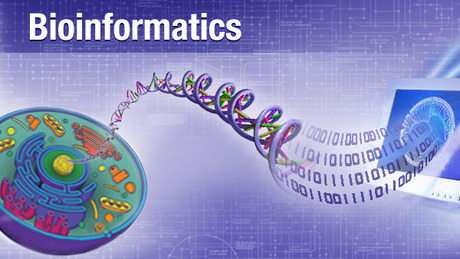
So, what is Bioinformatics?
Bioinformatics is “the application of computer science to solve biological problems”. To say it's a growing field would be an understatement: the growth of biological data has been exponential, necessitating innovative data management and data analysis techniques; it's fair to say that nowadays, in a lot of fields of biological research, more work is being done with computers than with, say, Petri dishes or lab mice. Taken from the opposite angle, biological research labs are at the forefront of the “big data” revolution. Lists of innovative big data companies include institutions such as Mount Sinai's Icahn School of Medicine (they are also well-known as a big MongoDB customer, if I'm not mistaken).
Rigorously, “bioinformatics” comprises an understanding of the type of problems bioinformaticians face, and the algorithms they use to solve them. By extension, it also includes the major databases of publicly-available bioinformatics data on the Internet − and truth be told, I didn't think there were so many of them!
As is usual in fields associated with academic research, bioinformatics is a field in which open source is prevalent, both in terms of the software itself (indeed, algorithms and tools that are not properly described in a peer-reviewed paper have little chance of being widely used) and in terms of the actual data. To repeat myself: the amount of data in freely-available databases hosted by such organizations as the National Center for Biotechnology Information or the European Bioinformatics Institute is staggering. Theoretically, any private individual with an Internet connection, or indeed company, could do effective biological research in silico; I'm guessing we're just at the beginning of a wave of bioinformatics startups following the lead of such as 23andme. It'll be interesting to see.
What does the course cover?
The Peking course covers quite a lot, from a rather comprehensive (and welcome) review of the history of bioinformatics, the present situation of the field, and what we can expect in the near future, to alternating descriptions of the major algorithms and/or techniques in use in the field and exploration of the available resources. It ends with a couple of case studies highlighting how the various techniques and databases surveyed in the course were integrated by actual researchers to investigate real-world issues.
Who is the teaching team?
There are two main professors: Drs Liping Wei and Ge Gao. Dr Wei generally handles the high-level stuff (e.g. background information, overviews of databases, etc.) while Dr Gao dives into the details of algorithms. Both are evidently highly qualified; the course draws tightly on their own research and contributions, which is very welcome as it makes the course so much more concrete.
What about logistics?
The course lasts for 6 weeks; two topics are covered each week, with a series of video lectures and a quiz; except for the last week, when the lectures are about case studies and the quizzes are replaced by a 40-question final exam.
It is notable that the course is bilingual; that is to say, it is offered simultaneously in Chinese and English. The Chinese lectures have slides with classroom shots inserted (meaning you actually see the professor speaking); the English lectures are slides-only.
In addition to the lectures there are supplementary videos such as lab visits and student presentations. These tend to be Chinese-only, so I skipped over most. There are also a couple of interviews of famous bioinformaticians, but I didn't find these so interesting.
My impressions
It's undeniable that the team take pains to be welcoming. It's also undeniable that the content is actually of a pretty good level. But there are a couple of problematic aspects with this course.
The first is − and it's horrible to say this, not being a native English speaker myself − that the speakers' English is not so great. It's not so much that they make mistakes, but rather, their intonation and rhythm is… well, they're obviously reading from a transcript. Dr Gao's voice droning formulae (ecks-aye-jay-plus-ecks-jay-plus-one-aye-equals-ecks-aye-plus-one-jay) for long minutes was almost enough to take me out of the course altogether. Thankfully, the subject matter is interesting, so I could stick to it with a little effort. In the end, I viewed the lectures at 1.5x speed to compensate for the speaker's slow diction, and I referred back to the transcripts when I had doubts.
The second problem is perhaps due to Coursera's platform: the quizzes are, well, just quizzes. It feels strange, and generally wrong, to have an algorithmics course in which you do no coding at all. Generally speaking, you have three tries to answer questions which mostly have three or four options… At one point I was so immensely tired I almost dropped the course; instead I deprioritized it and spent a minimal amount of time on it. So, while I did learn a bunch of stuff about bioinformatics, I can hardly say that my final grade (which will be in the high nineties) reflects my mastery of the subject.
Strangely enough, the final exam was possibly the most interesting part of the course, as some questions required us to go search for information by ourselves (which means first identifying the right database to query, finding how to query it, etc.) Possibly, a vast improvement of the course would be to scrap about half the quizzes and replace them by practical case studies: give students a set of data (gene names, diseases, etc.) and send them off to search for information using the tools discussed in the lectures. As they stand, the quizzes help little in teaching.
Do not, however, let that discourage you. If you're interested in learning about bioinformatics, certainly there could be much worse options than this course. It may not make you a bioinformatics researcher, but it will at least give you a handle on where to get started.
Monday, April 28, 2014
Just starting: Epigenetic control of Gene Expression, at Melbourne University
So there's a new MOOC over at Coursera starting up today.
Plus, I'm kind of in an Australian mood, what with the Astrophysics course at ANU.
Basically that's why monozygotic twin cats may have completely different colours.
I guess that'll be the real test, whether the instructor (Dr Marnie Blewitt) can make it easily understood. Based on the first 2/3rds of the first week's lecture, I'd say she does a good job of presenting the subject matter in an organized way that conveys the important information in a digestable package.
Right; let's go!
Why take this MOOC?
Because I really liked the genetics part of MIT's 7.00x Introduction to Biology, and wanted to learn more. Someone on the forums there pointed to this course, and here I am.Plus, I'm kind of in an Australian mood, what with the Astrophysics course at ANU.
What's epigenetics anyway?
It's the study of how protein synthesis (from DNA by way of RNA) varies, between individuals, between cells in a specific individual, and at different points in time for a specific cell, without changes to the actual genome (the DNA sequence).Basically that's why monozygotic twin cats may have completely different colours.
Sounds complicated.
That's right. Though you may spell it "fun".I guess that'll be the real test, whether the instructor (Dr Marnie Blewitt) can make it easily understood. Based on the first 2/3rds of the first week's lecture, I'd say she does a good job of presenting the subject matter in an organized way that conveys the important information in a digestable package.
Right; let's go!
Sunday, April 27, 2014
Dropping PH525 - Data Analysis for Genomics
Yesterday I wrote that it was "extremely unlikely I [would] get a certificate" for that course.
Well, it's official: I'm dropping out of PH525 - Data Analysis for Genomics (from Harvard via edX). It's not that the material is bad in any way; I just can't commit the necessary time and attention to the course. It's too close to what I'm doing with MIT's Analytics Edge class; there's only so many hours I can do R in a week.
Besides, next week (aka "tomorrow") I start both the Epigenetics course at Melbourne University and the MongoDB Advanced Operations course at MongoDB. If I'm already struggling to watch the Harvard lectures now, I dare not think what it will be in a few days.
So, well. I'll watch for repeats (or watch the archived course in due time).
Subscribe to:
Posts (Atom)